
Breaking Generational Patterns: Parenting Differently Than You Were Parented
As a marriage and family therapist, I’ve seen an array of parenting styles, family rituals, rules, and patterns of behavior. Every family is unique, which is one of the reasons I love this work, the honor of joining with families to create lasting, meaningful change and heal relationships.
The CRAP Strategy: How to De-Escalate Conflict in Relationships | Solid Foundations Therapy
When conflict keeps escalating and you cannot seem to find your way back to each other, sometimes you need a bridge strategy before you can get back to genuine connection.

Attachment Styles and Relationships: Why You React the Way You Do
Have you ever wondered why you can feel completely fine in your relationship one moment—and then suddenly feel overwhelmed by fear, anger, or the need to pull away?
Maybe your partner takes longer than usual to respond to a text, and your mind immediately starts asking, “Are they upset with me?” Maybe conflict makes you want to talk everything through immediately, while your partner seems to disappear emotionally. Or perhaps you desperately want closeness but become uncomfortable when someone actually gets close.
These reactions can feel confusing, especially when you genuinely love your partner.
The PACT Method: A Distress Tolerance Tool for Hard Days | Solid Foundations Therapy
When you have high expectations of yourself but life gets in the way, it is easy to end up feeling disappointed, exhausted, and stuck. The PACT method is a distress tolerance tool designed for exactly that moment.
Negativity Bias: Why Your Brain Fixates on the Bad and How to Work With It
Have you ever had one awkward interaction completely erase an otherwise good day?
Maybe your boss says, "Can we chat tomorrow?" and suddenly you're mentally updating your résumé. Or you send a text, don't get a response for two hours, and somehow your brain has decided the friendship is over.
If you've ever wondered why your brain seems to cling to the bad stuff while brushing right past the good, let me introduce you to one of my favorite concepts to teach clients: negativity bias.
What Healthy Boundaries Actually Look Like (video)
Boundaries are not about pushing people away. They are about protecting yourself and your relationships from the resentment that builds when needs go unmet and unspoken.
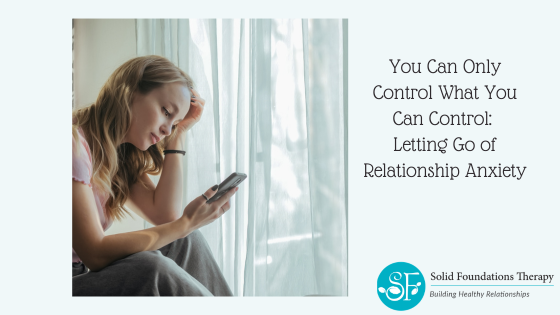
You Can Only Control What You Can Control: Letting Go of Relationship Anxiety
If you've ever replayed conversations in your head, wondered what your partner is thinking, or tried to figure out how to make your relationship feel more secure, you're not alone.
Relationship anxiety is something I see often in therapy. It can show up in many ways.
The VCR Method: What to Say When Someone Shares Their Feelings
Knowing what to say when someone shares their feelings with you, especially when you do not feel the same way, can be harder than it sounds. In this Therapy Moment, Robin, LMFT teaches the VCR Method: Validation, Comment, Reassurance. It is a simple, repeatable script that shows the other person you are listening, while still giving you space to share your own perspective without dismissing theirs.
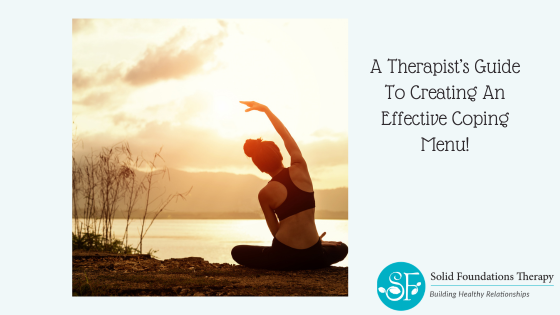
A Therapist's Guide to Building a Coping Menu for Anxiety, Stress and Hard Days
There’s a moment I see all the time in therapy.
A client is overwhelmed, anxious, emotionally flooded, or stuck in a spiral of negative thoughts. I gently ask, “What helps when you feel like this?”
And without fail, they stare at me like I’ve just asked them to recite the tax code backwards. “I don’t know.”
Meanwhile, if you asked them their Starbucks order, the plot of three seasons of a reality show, or exactly what their ex said during an argument in 2019, they could answer immediately.